Trajectory Trace
With Trajectory Trace, complete trajectories of detected road users can be stored, queried and visualised consistently and efficiently. Various sensors can be connected from any location via MQTT. The data is stored in a Postgres based timescale database with PostGIS extension. The GraphQL API can be used to create individual queries on historical and real-time data and to supply the front end with data for visualisation.
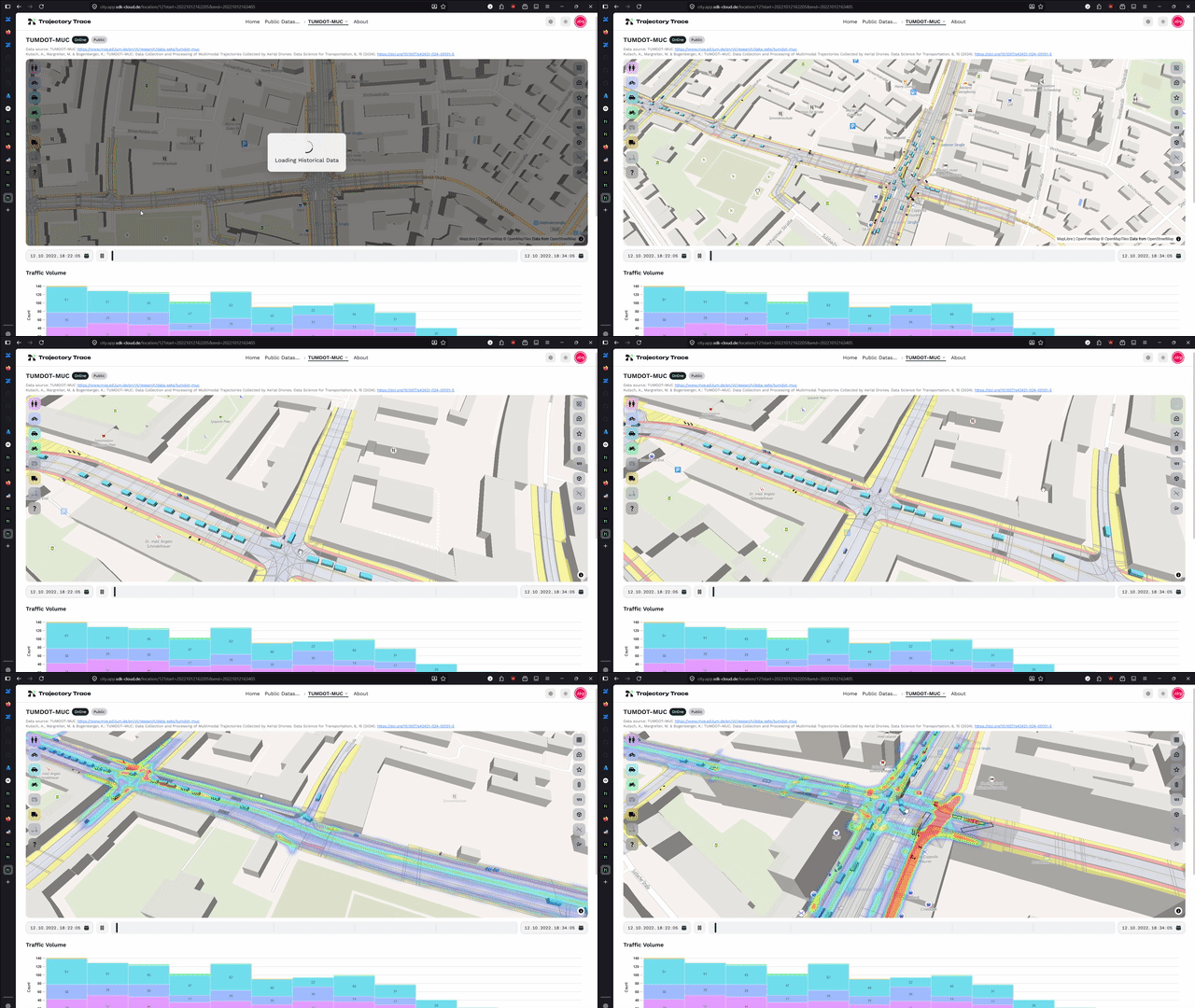
Special features and characteristics
- Minimal memory consumption and fast query times
- Combination of historical and real-time data
- Configurable map layers, 3D traffic models or boxes, and animated pedestrians and cyclists
- Trajectory, speed, acceleration, density and cluster analysis with class and legend filters
- GraphQL and REST API
- Integrated Swagger UI
- Integrated GraphiQL
- Data query, enrichment and user management via GraphQL
- Flexible connection of new locations and data sources via MQTT
- Simple integration of supplementary data sources such as traffic light data
- Possibility of generating manual and automated events
- Smooth camera tracking of individual road users with Follow me, and an Ego view aligned with their direction of movement
- Historical playback at adjustable speeds from 0.25× to 5×, with keyboard shortcuts and mouse, Mac and touchscreen controls
- Transparent popups and minimised entity details to keep the traffic scene visible
- Innovative route compression process for resource-saving storage at entity level
For instructions on playback, camera views and map controls, see the Location Page.